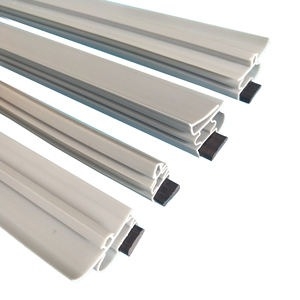
Chlorinated Polyethylene (CPE) for Refrigerator Magnetic Materials
Chlorinated Polyethylene (CPE) mainly acts as the matrix resin of magnetic rubber strips in refrigerator magnetic materials. It is compounded with ferrite and other magnetic powders to make permanent magnetic strips, which are embedded into refrigerator door gaskets to achieve magnetic sealing.
Core Functional Mechanism
-
Matrix Carrier
As a polymer matrix, CPE encapsulates and immobilizes inorganic magnetic powders (such as barium ferrite and strontium ferrite), forming flexible composite magnetic materials.
-
Closed Magnetic Circuit
The finished magnetic rubber strip adheres to the metal refrigerator cabinet to form a closed magnetic circuit, ensuring tight fitting of the door and preventing cold air leakage.
-
Structural Support
It delivers sufficient mechanical strength and resilience, protecting the internal magnetic powder from shedding or cracking under repeated bending.
Key Performance Advantages
-
Excellent Low-temperature Toughness
It remains flexible at temperatures ranging from -30℃ to -40℃, resisting hardening and brittle cracking to adapt to long-term low-temperature working conditions inside refrigerators.
-
High Filler Loading Capacity
Its molecular structure offers good compatibility, allowing high loading of magnetic powder without obvious loss of processing fluidity, thus retaining stable magnetic properties.
-
Weathering & Aging Resistance
It features outstanding resistance to ozone, UV radiation and chemical corrosion, extending the service life of sealing strips (generally 5 to 10 years).
-
Flame Retardancy & Safety
It is inherently flame-retardant, non-toxic and odor-free, complying with household appliance environmental standards such as RoHS.
Application Forms & Processing Technology
-
Main Grade Selection
Elastomer-type CPE (Grade B) is widely used, with a chlorine content of 25%–42% to balance hardness and flexibility.
-
Processing Methods
CPE is blended with magnetic powder and shaped into strips via extrusion or calendering processes, followed by magnetization treatment.
-
Composite Structure
It is often co-extruded or laminated with a soft PVC outer layer. The outer layer provides sealing adhesion, while the inner CPE magnetic strip delivers magnetic attraction and fixation.
Supplementary Market Overview
Despite CPE’s outstanding performance, modified PVC or TPE are currently the mainstream materials for the outer layer of refrigerator door gaskets, and CPE is primarily used as the
core material of magnetic rubber strips.
With stricter environmental regulations, some high-end products are gradually shifting to TPE/PP co-extrusion technology. Nevertheless, thanks to its balanced cost and performance, CPE still occupies a vital position in mid-to-low-end products and certain high-performance magnetic strips.